
Carriganass Castle is located on the northern bank of the Ouvane River just outside the village of Kealkill.
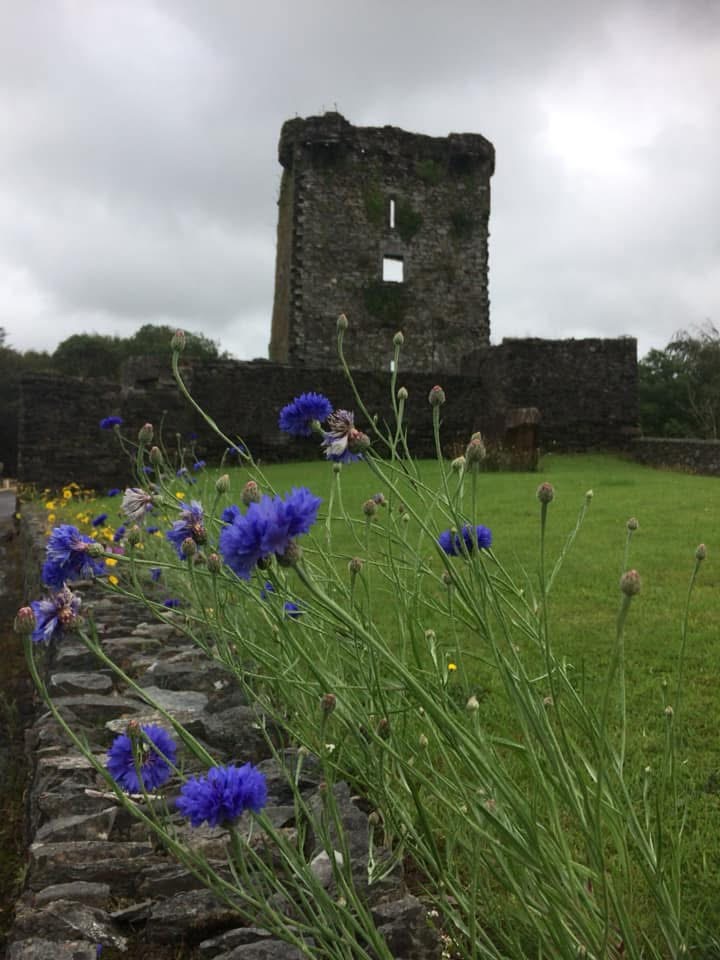
The word Carriganass in Irish means the ‘Rock of the Waterfall’ and judging by the position of the castle on its 12m outcrop of rock over the river, the name is very apt. The castle was built by an O’Sullivan Beare, the Chieftain in 1540 and comprises of an imposing 5-storey tower and a walled courtyard. The stone used to build Carriganass came from a local quarry about 2 miles/3.2km away from the castle site and the stone was transported hand-to-hand by labourers for that distance. The Chieftain responsible for the building became known as Dermot of the Powder as he accidentally blew himself up with gunpowder in 1549, just nine years after the building of the castle. Donal Cam O’Sullivan Beare was the most famous occupant of Carriganass. Donal Cam had a long military history and in 1601, he commanded the Munster forces on the Spanish side at the Battle of Kinsale. According to local folklore after Carriganass Castle was captured, Donal Cam’s wife, Aoife, fled to Gougane Barra where she went into hiding. An English military man named St Leger found
her there and murdered her. Donal Cam gained access to Carriganass Castle by disguising himself as a monk and in revenge, he tossed St Leger to his death from the tower into the rocky torrents of the Ouvane River. A poem called ‘The Revenge of Donal Cam’ was written as an ode to his vengeance.
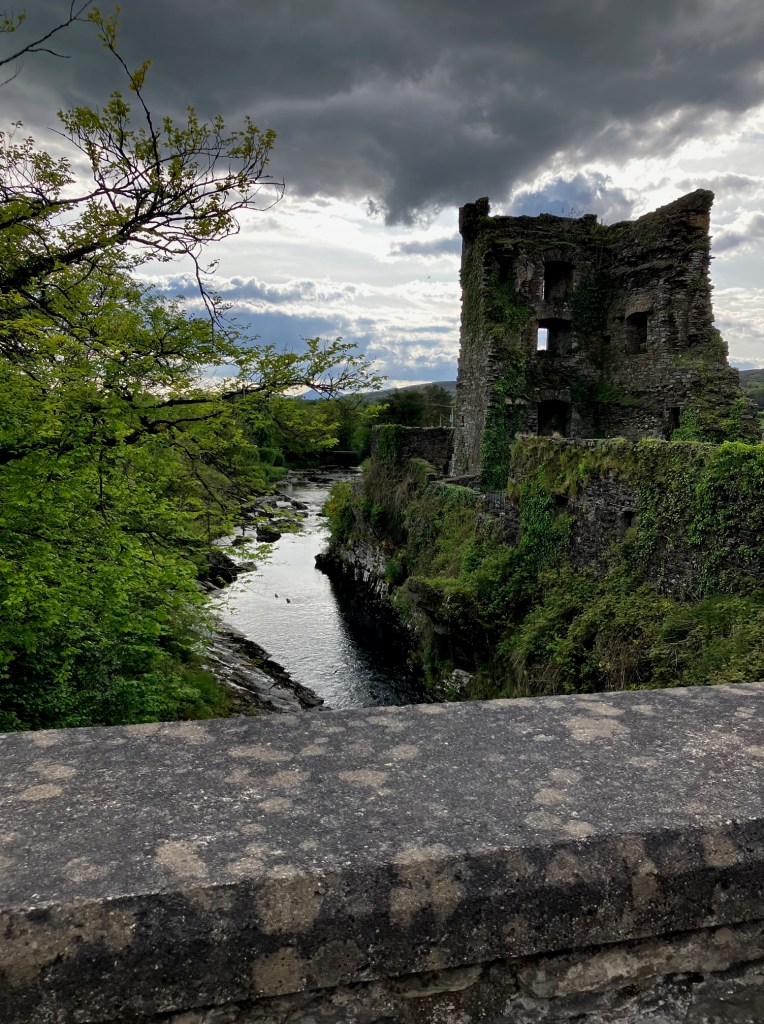
Carriganass Castle in Kealkill was built on the banks of the Ouvane River.
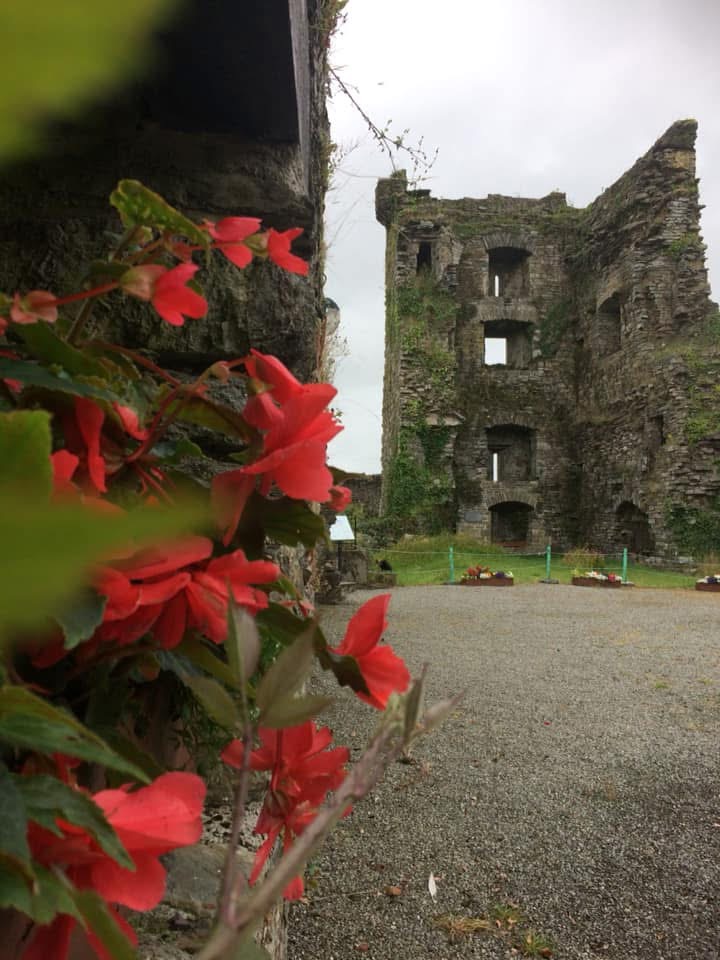
Other interesting facts about Carriganass Castle is that the upper floor of the bastion is covered with tiers of ‘small rectangular niches’ which would originally have served as nesting boxes. This level of the castle would have been used as a dovecote offering an insight and an indication into the diet of the inhabitants at the time. An aspect most
appealing to gory children is the fact that the mortar that is used to hold the stones of the castle together was made up of a paste consisting of bull’s blood!
Unusually, Carriganass Castle is completely a community-owned and managed asset, making it one of the very few castles in Ireland to have that status. The previous owners, Anne and Joe O’Sullivan, generously donated the castle to the community, which set up a non-profit, community-based company called Carriganass Castle Limited, which
now owns and manages the castle and amenity park in trust for the people. The work undertaken is done by a dedicated core of community volunteers who are constantly striving to improve the site by developing riverbank amenity parks and picnic areas around the castle, maintaining pathways, promoting tourism in the three valleys (Borlin, Mealagh and Kealkill) with Carriganass as the focal point, developing cycle routes and walkways linking with other significant sites in the area and creating an area for exhibiting local arts and crafts.
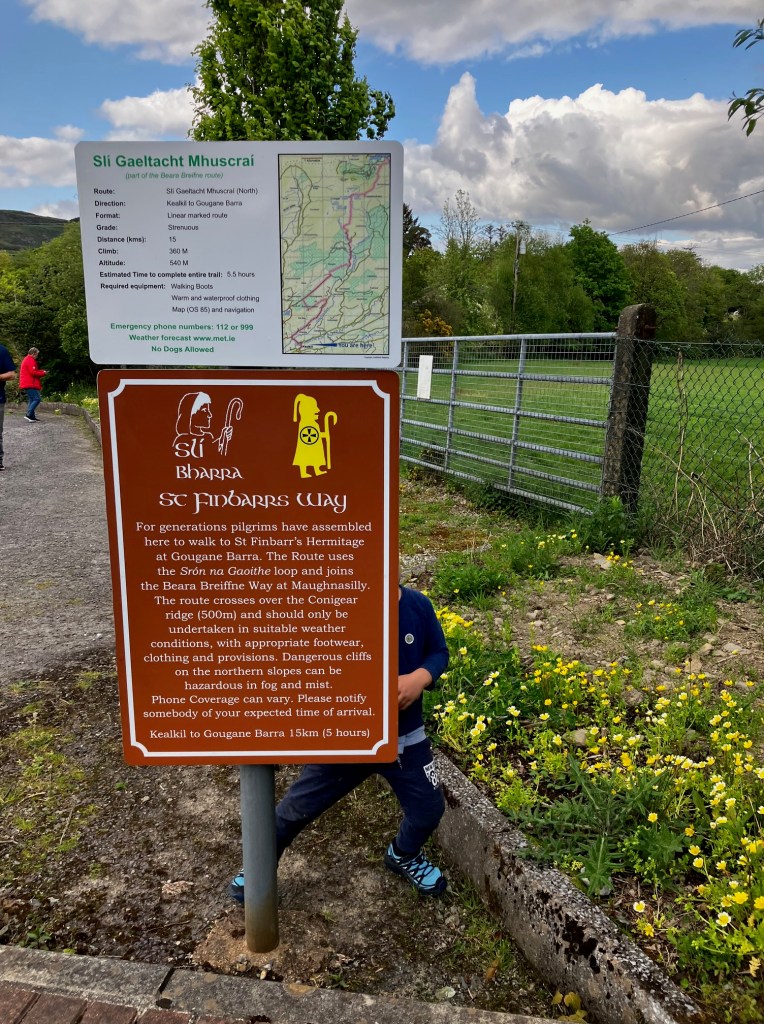
There are currently three established walks leading from the castle. Two of the walks are circular walks (the ‘Póc An Tairbh Loopwalk’ and the ‘Srón na Gaoithe Loopwalk’) to the north of the castle while the third walk leaves from the castle and leads to the stone circle south of the village of Kealkill.
Visit www.carriganasscastle.com for further information or follow their page on Facebook for updates on events and activities at the castle.
While in the area, it is also worth visiting the Kealkill Parklands, Kealkill Stone Circle and Gougane Barra.
 West Cork with Kids